
Nokma Custom in Garo Society: Roles And Responsibilities of A’king Nokma
Akhing Nokma as any person who is the head of the clan or Machong or Mahari, belong to the Garo tribe, recognised as such according to the customary law of Garos. But according to renowned academicians and researchers, Akhing Nokmas have more role than a titular head of a clan.

Ruel C Sangma
The A’king
A’king means any land held by clan or machong under the custody of the head of the clan or machong called nokma recognised as such by the District Council (Council, 1958, p. 17). A’king may consist of one village or of one with satellite villages grown out of the growth of population with consequent multiplication of households with the female line having: branched out of the oldest family extending A’king areas in desolate lands as in the olden days. These A’kings were noticed as mutually independent territorial entities within the hills. In their political relations, each chief is entirely independent and governs his dependents with the assistance of the Panchayat of the heads of households (Kar, 1982).
Inheritance of A’king descends from mother to the chosen daughter residing with the parents. Sale, mortgage or transfer of a part of the A’king is the exclusive right of the A’king Mahari and can be effected by the Nokma on behalf of his wife only on the approval of her Mahari. Else, every household once established or allowed to settle in the A’king automatically acquires equal privilege in respect of the uses of A’king land. An ordinary household has no right to own a part of the A’king unless it has purchased it or received it as a gift from the Nokma household (Kar, 1982).
A’king Nokma:
Garo Hills District Council recognises, A’king Nokma as any person who is the head of the clan or Machong or Mahari, belong to the Garo tribe, recognised as such according to the customary law of Garos (Council, 1958, p., 80). But according to renowned academicians and researchers, A’king Nokmas have more role than a titular head of a clan. Burling (1963) claims Nokma’s family is the senior most in A’king land from where other households originate and custodian of the Akhing land. Sangma (1979) adds Nokma is the head of the family entitled to the A’king land. Marak, (2000) narrated the glorious past of Nokmas. During and prior to the British periods, Nokma was exercising the power of a monarch within the jurisdiction of his A’king land. He exercised power both in Social and Administration. He also exercised the power to preserve and protect the interest of the machong and the A’king Land. Joshi, (2004) holds the view that the institution of Nokma is a novel innovation which is a symbol of Garo unity in an A’king, with privileges and precedence. Therefore A’king Nokma is head of the clan or sub-clan; the monarch, ruler, and head of the A ‘king village that unifies the people of the A’king land.
A’king Nokma: The Role in Garo Community
Burling, (1963) in Rengsanggri: Family and kinship in a Garo village state that Nokma who performs sacrifices, should belong to a wealthy household. The wealth is mostly used to provide sacrificial animals for religious ceremonies. Still, in many villages, the first Nokma is the wealthiest household of all. A bit of extra effort is made on the part of all concerned to ensure that the heir of a Nokma, the prospective successor to that position, is an able and responsible individual, capable of hard work necessary to maintain the household and fulfill his duties.
Sangma (1979) in History and Culture of Garos states that the A’king Nokmas are responsible for peace and proper administration, submission of reports on epidemics, on births and deaths or any unusual occurrences in his A’king. He involves actively in the construction of roads, bridges and their maintenance. Besides, he also regulates jhum cultivation and participates with the villagers in all public and social works and functions.
In olden days, it devolved upon the Nokmas to lead his parties to wars and to protect his villages against external invasions. Nokmas settle all cases of theft, injury to property, injury to the persons, house-trespass and affronts, provided neither of the parties is a near relative of theirs or a foreigner. They punish by fine after the proceedings are held in open Durbar. The decisions made in these durbars are final and put into execution at once.
However, the position of the Nokma is very delicate. As a matter of fact, the Nokma cannot be compared to a chief who exercises his political authority with various social and economic advantages. The Nokma is more a social and economic representative of the village without having an advantage or authority (Sangma, 1979).
Chattopadhyay, (1985) in Tribal Institutions of Meghalaya speaks of Nokma as a tiller of his land who had to put a lot of manual labour for himself. The Nokma was the custodian and supervisor of the A’king and his supervising authority covered the members of the machong settled in all categories of land. He was the principal man responsible for legislation, administration and justice, and security of the community, and his temporal authority was linked with spiritual function covering indigenous rites and practices that were highly meaningful in the tribal/folk-peasant situation and contributed to the attachment of the people to the land and its culture. The priestly function was, however, limited as the spiritual concept did not rise beyond the level of animism as the rites and rituals aimed at material prosperity (e.g. good harvest) and protection against ailment and natural calamity. The priest, called kamal, could attain his position by virtue of his ability to master the rites; but his office was not hereditary nor did he enjoy any special privilege and had to subsist on his arms like any commoner. The role of the Nokma in conducting the annual communal festivals was indispensable. The Nokmaship could, therefore, develop as a definite institution. It could not, however, consolidate itself to satisfy the qualification of a chief, partly due to the fact that the incumbent was a resident in the machong and derived his authority from his wife, and partly due to the democratic and equalitarian tradition of the society.
Ladia, (1993) in Administration of Justice in Meghalaya reiterates, before the advent of British rule, the whole judicial system was managed by Nokma with his village council. The society was sovereign, and its ethos had structural and moral force to bind the conduct of the people. There was no effective social or territorial organization beyond the Machong and no political authority above the Nokma. He followed a democratic system of administering justice in the village court and depended heavily on the opinion of the elders present in the court. Therefore, his role was to guide the discussion and to encourage the Assembly to reach a consensus. The judiciary, according to the Garo custom, centred around the Nokma.
The village Court, therefore, continued to aid the Nokma in the preservation and maintenance of law and order within the A’king land. It was the supreme authority acting through the Nokma in every affair and judicial matters in a village. The village court normally follows a system of procedure. When the village Court met on the day appointed by the Nokma, all the male members attended the meeting. As a judge, the Nokma proceeded with the explanation for the cause of the meeting. He facilitates for an amicable settlement between the parties.
Chakrabarti and Baruah (1995) in their article on the institution of Nokmaship in Garo Hills: some observations establish the A’king Nokma, as the custodian of the clan lands. He has the responsibility to entertain visitors, present at village functions, and adjudicate village disputes. In colonial times the Nokma was responsible for collecting taxes and reporting crimes. After independence, the district government took over some of the judicial, custodial, and fiscal powers of the Nokma, nevertheless, he is still held in high esteem by villagers for his continued social and religious roles.
K. R. Marak (1997) in Traditions and Modernity in Matrilineal Tribal Society notes Nokma looks after the village land as well as members of the village. Nokma took the leadership in all village activities and since he a warrior, he did not hesitate to punish the guilty if he suspected. Under the leadership of Nokma, they extended the boundary of the A’king by waging war with neighbouring Nokmas, visited markets with their local produce to purchase essential items such as salt, dried fish and jewellery of all kinds and most important metal implements and weapons which they needed so desperately, attacked plains to capture slaves. Garos did not tolerate people crossing over from other villages.
J. R. Marak, (2000) in his book, Garo Customary Laws and Practices states a Nokma being the custodian and guardian of A’king land of a particular machong exercises the power both in social and administration. He also exercises the power to preserve and protect the interest of the machong and the A’king land. He is to regulate the jhum cultivation of the villagers under his/her A’king land. Although the mother of the house and her clan members are the real owners of the A’king land, all the actions and transactions were done in the name of a male A’king Nokma . During the British periods, an A’king Nokma was exercising the power of a monarch within the jurisdiction of his A’king land, moreover, because of the prevailing social conditions of the Garos, there was transparency in all the acts and transactions affecting an A’king land and no would ever venture to deceive any of the clan members.
J. R. Marak continues Nokmas are the overall in-charge of both in social and administrative matters within the jurisdiction of their A’king land. The main functions of the A’king Nokma are to look after the welfare of his A’king and the people within his/her A’king. He is responsible for the distribution of Land for jhum cultivation and other purposes to the residence of his A’king land. He is to participate in all public and social functions.
Joshi, (2004) in Meghalaya Past and Present states, Village Nokmas were powerful chiefs in the past, the council in which elders from the clans or groups of clans sat, presided over by Nokmas, decided all issues such as foreign policy, war and peace, inter-village and land disputes and judicial cases. This council was called Mela-Salbonga. A’king Nokmas assumed the position because they held and managed them on behalf of their respective wives’ Maharis. Nokmas supervise temporal affairs and were the authoritative interpreters of the local customary laws and customs of the people. Village Nokmas are the custodians of the village rites; they fix the dates of the festival, organise the programmes, inaugurate the dance, donate sacrificial animals, timber, weapons, and such accessories. They are supposed to be resourceful, having a large number of gongs for use at festivals, and their houses so elaborately decorated which keep them discernible from other houses. Nokmas were supposed to be rich spiritually and possessed of the virtue, the sterling qualities of head and heart and proficient enough in oratory, military commandership, and fulfilment of other responsibilities.
Joshi continues that, several Maharis are under the administration of a Nokma or headman who is the husband of the inheritress of the oldest family in the Machong. The Nokma is, therefore, he headman while his wife is the custodian of the Machong. The Nokma assumed socio-political authority over the Machong. His office commanded authority as he was the temporal and spiritual head of the kin group, but with it came the expenses he was expected to bear for the sacrifices he performed. He was the custodian of the A’king or ancestral land in the Mahari, and where disputes arose within the Mahari, he was responsible for passing judgment. As a village headman, he was also responsible for protecting the village population and property from external interference. Since it was virtually impossible for one individual to manage the affairs of a clan, the Nokma was assisted by two councils, the Mela-Salbonga, and the Jigma- Changga. All male adults from the Maharis within the Machong comprised the former which settled inter-Mahari disputes, executed administration, distributed lands, fixed dates for festivals and decided any other matter relating to the Machong. In an egalitarian society, this assembly must have had a tremendous influence over the Machong. For questions of war and peace decision was taken by all male members of the A’king in the Jigma-Changga which must have met frequently in an age of inter-clan feuds and raids. There was no effective social or territorial organisation beyond the Machong and no political authority above the Nokma.
In modern times the need for education was felt by them. Missionaries established schools in main areas and village schools were established by Nokma and village council. Gradually Nokma allotted land for permanent cultivation and wet-rice terraced cultivation, modern vegetable and fruit cultivation. Many took to weaving and an increase in roadside trade and traffic came to existence (Joshi, 2004 P. 100-101).
Thomas, (2005) in Polity and Economy, Agenda for Contemporary North East India states among the Garos, the A’king Nokma as the head of the clan and the custodian of the A’king land, is entrusted with certain political and administrative powers. He occupies a high and respectable place in the Garo society. He is the pivot of the village organisation through whom the basic network of the entire society is woven. In fact, the Nokma plays the leading role as the central figure in village activities and externally represents the village.
The Nokma is the centre of socio-political activities within his jurisdiction. He is responsible for the peace and good administration within his A’king land. He has to keep himself abreast of all that goes on within his jurisdiction (J. C. Thomas, 2005).
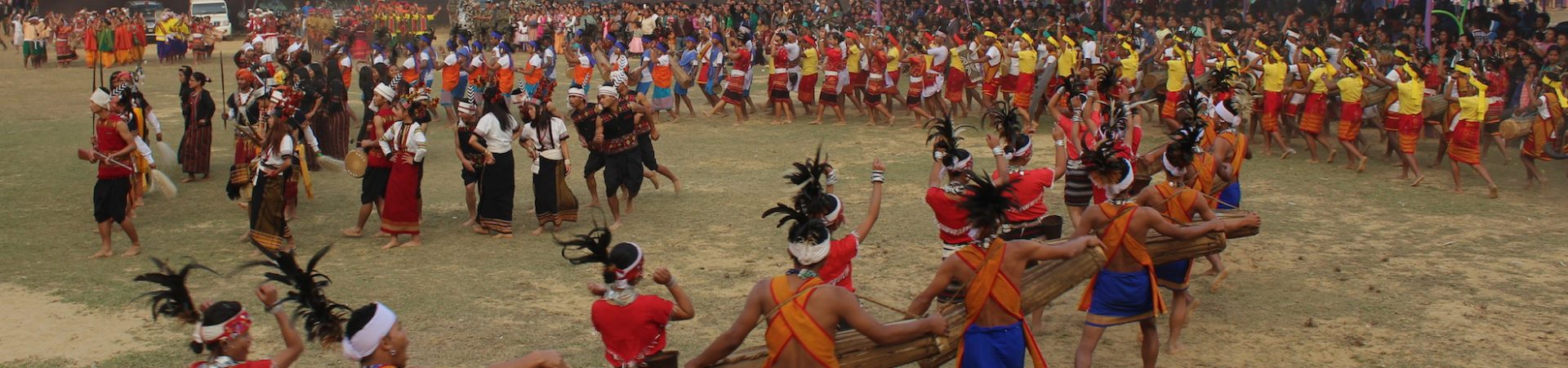
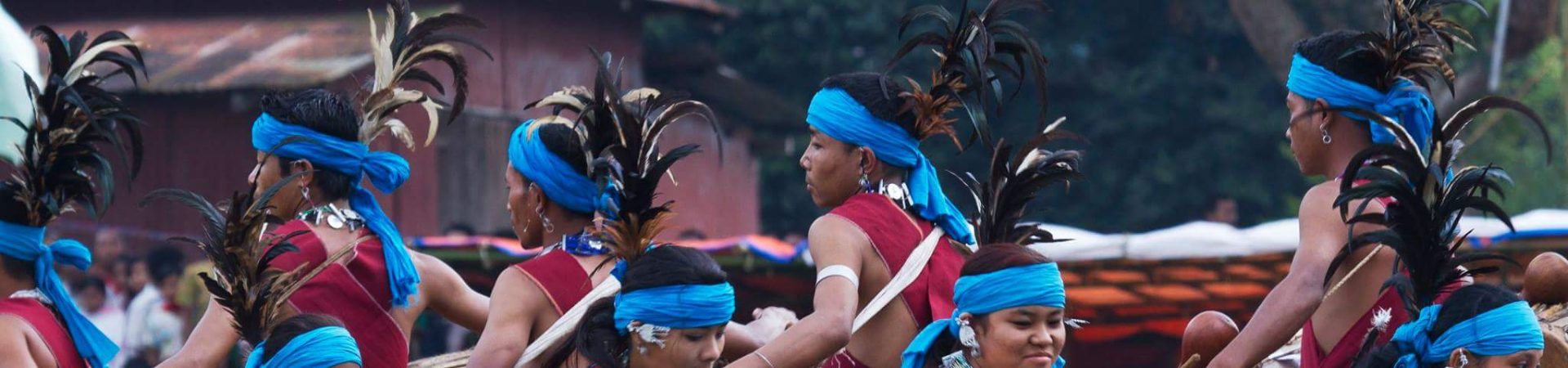
Roy, et al. (2007) in Garo (Achik) Tribe of Meghalaya notes since Garos are mainly agriculturist and fully depend on jhum cultivation the worship of presiding deities which control seasons and whose blessings are required for a good crop form an integral part of Garo socio-religious festivals. All such festivals have two components social and religious. The religious component includes propitiation of deities and spirits, while the social aspect centres around feast, music, and dance. All these festivals are organised and managed by the A’king Nokma in his A’king land.
Two persons assist the Nokma in the administration of the village affairs. The Nokma along with his two assistants and a few male elders of the village constitute the village council. The disputes are decided collectively. It may be mentioned here that ordinarily disputes are settled amicably by the Mahari of the respective contending parties.
Karlsson, (2011) in Unruly Hills, Nature, and Nation in India’s North East reiterates, that the Nokma is roughly equivalent to a village headman. The Garo headmanship is a rather complicated and amorphous institution. The Nokma is commonly likened to a representative of the village. On the one hand, the Nokmaship is said to be neither vested with any political powers nor linked to any direct economic advantages. The Nokma is the ceremonial head of the village, which among other things involves duties to perform religious sacrifices, hold feasts and entertain guests. In this respect, he has several obligations, and if they are performed successfully the Nokma will gain prestige and reputation, which can translate into both political and economic power. On the other hand, as the Nokma, or to be more precise the A’king Nokma, he holds the title to village lands on behalf of his wife and her matri-kin; the office in itself also carries great importance. With the coming of British colonial rule, the office of Nokma was vested with a number of administrative functions, such as a collection of house tax, which further strengthened the position of Nokmas in their respective villages. Nokma is the person best suited to facilitating development and preventing land alienation as well as to controlling insurgency and maintaining the peace in his respective village. Read more
